



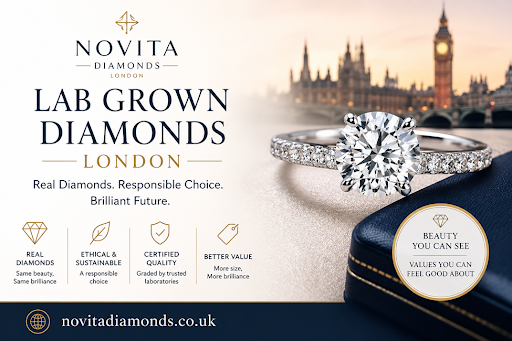
Why More Buyers in London Are Choosing Lab Made Diamonds
Buying a diamond in London often comes with one problem. You want quality and beauty without paying inflated prices for tradition. Many buyers also want clarity about sourcing and production. That is why interest in lab made diamonds continues to grow across London. These diamonds are created in controlled environments using advanced technology that replicates the natural diamond growing process. The result is a real diamond with the same physical and chemical structure as a mined stone. For you as a buyer the difference is practical. You get more size and better quality for the same budget. In a city like London where pricing matters this changes how people shop for jewellery. A buyer who once had to settle for a smaller stone can now choose a larger diamond with higher clarity. Example: A £2500 budget may buy a smaller mined diamond with visible flaws. The same amount can often buy a cleaner and larger lab-created option.
What Makes These Diamonds Real
A common misunderstanding still exists around lab-created stones. Some buyers think they are imitation jewellery or synthetic substitutes. They are not. A laboratory diamond is still a real diamond. It has the same hardness, sparkle and durability as a mined one. Jewellers test them using the same grading systems used for natural stones. You can find them certified by respected grading labs. These certificates measure:
- Cut
- Clarity
- Carat weight
- Colour
The main difference is origin. One comes from beneath the earth over millions of years. The other is produced using controlled scientific methods in a shorter timeframe. For everyday wear there is no practical difference in performance.
How London Buyers Approach Diamond Shopping Today
London buyers are informed. Many compare products online before stepping into a showroom. They review certification details, pricing structures and return policies. They also pay attention to transparency. This shift has changed the jewellery market. Shoppers no longer buy based only on branding. They compare values. That is where lab grown diamonds London retailers now compete aggressively. Buyers want modern options that fit real financial priorities. Spending less on a diamond can free the budget for travel housing or savings without sacrificing appearance. For engagement rings this matters even more. Many couples now shop together. They often prioritise practicality over tradition. They still want quality jewellery but they question old pricing models.
Price Differences That Matter
Cost remains one of the strongest reasons people switch to lab-created stones. In most cases a laboratory diamond costs significantly less than a mined equivalent of similar grade. The savings can range from moderate to substantial depending on size and quality. This allows you to focus on features that directly improve appearance.
- Better cut quality
- Higher clarity
- Larger carat size
- Improved colour grade
Instead of compromising you gain flexibility. That flexibility matters in London where living costs already pressure personal budgets.
Understanding Quality Before You Buy
Not every diamond offers the same visual appeal. Whether natural or laboratory-created quality still depends on grading standards. Cut quality has the strongest impact on sparkle. A poorly cut diamond can appear dull even with strong colour and clarity grades. When reviewing options, focus first on cuts. Then consider clarity and colour according to your personal preference and budget. Here is a simple approach:
- Prioritise excellent or ideal cut grades
- Choose near-colourless grades for better value
- Select clarity levels where flaws are not visible to the eye
Many buyers overspend on technical perfection that cannot be noticed without magnification. A balanced approach usually gives the best result.
How Jewellery Design Has Changed
The rise of laboratory-created diamonds has also influenced jewellery design across London. Designers now experiment more freely because material costs can stay lower. This creates more options for custom rings, earrings and necklaces. You are no longer limited to standard designs. Many jewellers now offer:
- Custom engagement rings
- Hidden halo settings
- Minimalist solitaires
- Vintage-inspired bands
- Modern geometric styles
This matters because buyers increasingly want jewellery that reflects personal style rather than social expectations. London in particular supports that shift. The market includes traditional Hatton Garden workshops alongside modern independent studios.
Ethics and Supply Chain Questions
Some buyers choose laboratory diamonds because they want clearer sourcing information. Mining practices differ across regions and supply chains can become difficult to track. For many people this creates uncertainty. Laboratory production reduces some of those concerns because the origin process is easier to document. That said, energy use still matters. Production facilities vary in sustainability practices. Some rely on renewable energy while others do not. If environmental impact matters to you, ask direct questions before purchasing. Look for information about:
- Production methods
- Energy sourcing
- Certification standards
- Manufacturing location
A good jeweller should answer clearly without vague language.
What to Expect From London Jewellers
The London jewellery market is competitive which benefits buyers. You can find both luxury boutiques and independent jewellers offering laboratory-created stones. Many also provide online consultations and virtual previews. Before purchasing, compare more than price. Review:
- Certification details
- Return policies
- Warranty coverage
- Resizing options
- Setting craftsmanship
A lower price means little if the final workmanship is weak. You should also ask to see diamonds under different lighting conditions. Jewellery store lighting can exaggerate sparkle. Natural daylight gives a more accurate impression.
Long Term Wear and Maintenance
A laboratory-created diamond is durable enough for daily use. It ranks the same on the hardness scale as mined diamonds. That makes it suitable for engagement rings and everyday jewellery. Maintenance remains simple. Clean your jewellery regularly using warm water, mild soap and a soft brush. Professional inspections once or twice a year also help maintain setting security. Scratches usually occur on metal settings rather than on the diamond itself. White gold may need replating over time while platinum develops a softer surface finish with wear. These are normal maintenance issues regardless of diamond origin.
Why the Market Keeps Expanding
The jewellery industry in London continues adapting because buyer priorities have changed. People research more. They compare values more carefully. They ask direct questions about sourcing and pricing. That trend supports continued growth for lab made diamonds in both luxury and mid-range markets. The appeal is straightforward. You gain flexibility in design budget and quality without losing the visual and physical properties associated with traditional diamonds. For many buyers that combination simply makes more sense.
Common Questions Buyers Ask
Do laboratory-created diamonds lose value?
Resale markets differ between natural and laboratory-created stones. Most buyers choose them for personal use rather than investment value.
Can jewellers tell the difference?
Yes. Professional equipment can identify growth patterns and origin. To the naked eye they appear the same as mined diamonds.
Are lab grown diamonds London jewellers sell certified?
Most reputable London jewellers provide certification from recognised grading laboratories. Always request documentation before purchase.
