



Unravelling the Thread of Intricacy
While the clatter of a washing machine is a common soundtrack in many homes, few pause to consider the downstream effects of their laundry habits. Yet, these quotidian tasks bear an intricate connection to an often-neglected aspect of our domestic lives – our septic systems. As water and detergent swirl together to cleanse our garments, they initiate a chain reaction that culminates in our septic tanks.
Hence, understanding this relationship between laundry rituals and the health of our septic systems is not just intriguing but essential. Inextricably linked to maintaining both environmental balance and domestic hygiene, septic systems have become cornerstones in modern waste management.
Yet they are vulnerable entities – entities whose efficacy can be subtly eroded by such seemingly harmless activities as doing laundry. The unsuspected link between washing clothes and waste management may seem obscure at first glance; yet, it has profound implications for both individual households and broader communities.
And so we embark on a journey from the humble washing machine drum to the hidden depths of household septic tanks – two vastly different worlds connected by pipes, water, and human activity. This article endeavours to shed light on this intriguing nexus between home hygiene tasks and underground waste processing ecosystems.
A Clean Sweep: Understanding Why It Matters
Recognizing that certain everyday actions can significantly impact something as crucial as your septic system is an eye-opening realization. Our daily routines shape not only our immediate environment but also impact larger ecosystems – sometimes in ways we may never even suspect.
The acumen lies in understanding that seemingly unrelated domestic habits could culminate into significant problems if left unchecked; problems that could rapidly escalate from minor inconveniences to major challenges. Hence, the correlation between laundry activities and septic system health isn’t trivial; it’s a pertinent aspect of responsible household management that has far-reaching implications.
Not only individual households but entire communities can be affected by poor septic system health. Failed systems can lead to groundwater contamination, posing serious public health risks.
By being mindful of our home practices such as laundry habits, we become active contributors to maintaining the health and well-being of our communities. This article will serve as an enlightening guide in helping you understand this interconnection better and assist you in making more environmentally friendly decisions in your daily life. Understanding Septic Systems Function and Importance of a Septic System
A septic system, in essence, is a personal, on-site sewage treatment facility mainly used in rural areas where municipal sewage systems are unavailable. Its key functions include collecting wastewater from a residence, separating solid waste from the water, breaking down organic matter through bacterial activity and safely disposing off the treated water into the ground. This intricate mechanism operates seamlessly beneath our feet, often without demanding much attention.
The importance of septic systems transcends their basic function; they play an indispensable role in waste management and environmental health. By treating wastewater locally, septic systems significantly reduce the risk of raw sewage spillage into local environments which could contaminate groundwater sources and natural habitats.
Properly functioning septic systems regulate harmful substances found in domestic wastes before releasing water back into the environment. Furthermore, they exemplify sustainability by recharging local aquifers with treated water and reducing dependency on municipal sewage infrastructure which may require extensive transportation of waste over long distances.
Thus contributing to greenhouse gas emissions. Understanding how these vital systems work is crucial for their maintenance and longevity. Varieties of Septic Systems
Septic systems can vary widely depending upon factors such as soil conditions, topography, climate conditions or usage intensity. The two most common types are conventional (also known as gravity) septic systems and aerobic treatment units (ATUs).
A conventional system relies on gravity to move effluent from house to tank to drainfield whereas an ATU introduces oxygen for bacteria consumption which enhances degradation process. Mound septic systems are another notable type generally employed when there is insufficient soil depth for installation of conventional system or high water table situations.
In this case, mound system incorporates elevated ‘mound’ of sand where effluent is pumped after primary treatment in septic tank. Alternative systems like constructed wetland systems or drip distribution systems may be used in extreme environmental conditions or specific site requirements.
The different types of septic systems have distinctive operation methods and requirements which influence their installation, maintenance, and repair costs. Being aware of the type of system installed at a property can provide owners with crucial insights into its potential impact on lifestyle choices, including laundry habits. The Operation of Septic Systems
A septic system operates in a series of systematic stages. Initially, wastewater from the house is directed into a septic tank where solids settle to the bottom forming sludge while lighter substances like oils float to form scum layer. This allows relatively clear water to be gradually discharged into the drainfield for further treatment.
In the tank, anaerobic bacteria work on breaking down solid waste components reducing their volume and converting them into simpler compounds. The effluent then moves onto the drainfield composed typically of perforated pipes laid in gravel-filled trenches where it percolates through soil acting as natural filter removing harmful bacteria, viruses or nutrients thus preventing groundwater contamination.
This treated water eventually percolates deep enough to reach underground water sources thereby completing its cycle back to nature. This meticulous process underpins why certain laundry habits can severely impact your septic system’s health—fine particulates from lint or chemicals from detergents can upset this carefully balanced microbial ecosystem leading to breakdowns or failures.
The Inextricable Connection Between Laundry Habits and Septic System Health
Unraveling the Impact of Laundry Habits on Septic System Functionality
The intimate relationship between our daily laundry habits and the health of our septic systems often goes unnoticed, yet it is paramount. The volume of water, frequency of washing, type of detergent used, and other factors can either enhance the longevity of your septic system or expedite its demise. Overloading a washing machine, for instance, not only burdens the appliance but also sends an excessive amount of water into the septic tank in a short period.
This sudden surge can disturb the delicate balance in the tank that’s necessary for waste breakdown. Moreover, frequent laundering can accelerate the filling rate of a septic tank leading to more frequent pumping intervals.
If left unchecked, solids may overflow into absorption areas causing blockages or even system failures. Therefore, regulating laundry loads and observing appropriate schedules for washing can significantly impact system efficiency.
It is also worth noting that habitual use of hot water for laundry purposes contributes to an increase in total household energy consumption. By extension this could indirectly impact overall environmental sustainability efforts due to increased energy demands and potential contribution towards greenhouse gas emissions.
Fathoming The Role Of Detergents, Bleach And Cleaning Materials In Septic Tank Health
Detergents are indispensable players in our laundry rooms. However beyond their stain-busting prowess lies potential harm to our septic systems depending on their composition. Conventional detergents contain surfactants which aid in cleaning but may resist biodegradation within a septic system thus accumulating over time and harming beneficial bacteria crucial for waste decomposition.
Bleach poses another quandary; while its disinfectant properties are beneficial in eliminating bacteria on garments, it can be deleterious to the helpful bacteria within septic systems. These microorganisms are intrinsic to the breakdown of solids and their obliteration could lead to system inefficiencies and eventual failure.
Overuse of bleach, therefore, may inhibit the beneficial biological activity necessary for septic system health. Similarly, fabric softeners and other cleaning additives can introduce chemicals into your septic tank that not only disrupt bacterial balance but also potentially contaminate groundwater.
A large percentage of fabric softeners contain non-biodegradable quaternary ammonium compounds which persist in the environment after disposal and can pose a threat to aquatic life. In essence, it is incumbent upon us as responsible homeowners to judiciously select our laundry products bearing in mind their potential impact on our septic systems and ultimately our environment.
Common Laundry Habits that Harm Septic Systems
The Burden of Overloaded Washing Machines
One common laundry habit detrimental to the health of the septic systems is overloading washing machines. This practice places an undue burden on septic systems as they are forced to deal with a sudden influx of water and waste material.
This unexpected deluge can cause system strain, potentially leading to mechanical failure or backup issues. Consider for instance a typical American household, which may do up to 8-10 loads of laundry per week.
If these loads are concentrated into one or two days, the septic system must handle large quantities of water in a short time span. The strain on the system can lead to premature wear and tear, making it susceptible to failures and costly repairs.
The Dangers of Non-Septic Safe Detergents
Another deleterious laundry habit includes using non-septic safe detergents. Many conventional detergents contain ingredients such as surfactants, solvents, phosphates, and other harsh chemicals that can wreck havoc on your septic system’s biological equilibrium.
These chemicals are not only harmful for their potential corrosive nature but also because they kill off beneficial bacteria in your septic tank necessary for breaking down solid waste. Without these bacteria, solids accumulate faster than they decompose leading eventually to system clogging or total failure.
Bleach and Fabric Softeners: Silent Septic System Saboteurs
Furthermore, frequent use of bleach or fabric softeners can disrupt the balance within a septic tank. These products often contain chemicals that either directly damage the structure of your septic system components or indirectly affect it by killing off helpful bacteria necessary for waste decomposition.
More so than just an infrequent splash for stain removal or whitening purposes, regular dependence upon bleach and fabric softeners can precipitate a chain of damaging reactions in your septic tank. Thus, the prudent homeowner must exercise caution and restraint with these products.
Best Practices for Laundry to Protect Your Septic System
Scheduling: A Simple Strategy for Septic System Longevity
An effective strategy to alleviate strain on your septic system is by scheduling and spacing out laundry loads throughout the week. By doing so, you prevent an abrupt influx of waste and water into your septic system, thus allowing it more time to effectively process each load’s waste.
The Power of Biodegradable Detergents
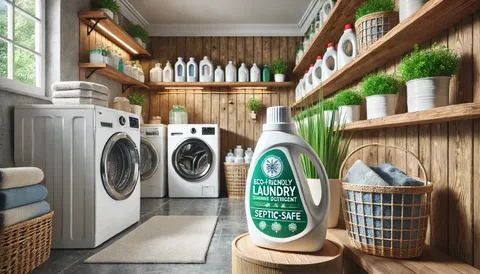
In addition to mindful scheduling, choosing environmentally friendly, biodegradable and septic-safe detergents is another excellent practice. These detergents lack harmful chemicals that are present in conventional ones thereby preserving the health of both your septic system and environment.
Minimizing Use of Bleach or Fabric Softeners
Limiting the use of bleach or fabric softeners serves not only as a cost-effective measure but also as a means to extend the lifespan of your septic system. Embracing alternatives such as color safe bleaches or natural fabric softeners like vinegar can drastically reduce the impact on your system.
The Importance Of Regular Washing Machine Maintenance Checks
Regular maintenance checks on your washing machine should also be conducted. This includes checking for leaks which could lead to excess water entering the system and ensuring that lint filters are routinely cleaned to avoid unnecessary solid waste entering the tank.
Case Study – Impact Of Improved Laundry Habits On Septic System Health
The value of adopting these best practices becomes evident when we look at real life cases where changing laundry habits significantly improved septic system health. Families who implemented such changes reported fewer instances of malfunctioning systems, experienced lesser need for repairs and enjoyed extended system lifespan, thus testifying to the efficacy of these strategies.
Conclusion
To conclude, our laundry habits play an integral role in determining the health and longevity of our septic systems. By understanding the detrimental effects of certain practices such as overloading washing machines or using harmful detergents, and by adopting beneficial ones like spacing out loads or choosing septic-safe products, we can ensure that our septic systems function optimally. The path to sustainable living is not only about making grand gestures but also about paying attention to these small yet crucial aspects of everyday life.
