



Introduction: Why Governance Is the Backbone of Enterprise GenAI
As enterprises accelerate adoption of generative AI, the conversation is shifting from “Can we build it?” to “Can we trust it?” Generative ai workflow automation now influence business decisions, customer interactions, regulatory reporting, and operational workflows—making risk, governance, and compliance non-negotiable.
An Enterprise GenAI Risk, Governance, and Compliance Framework ensures that AI systems are secure, ethical, explainable, and aligned with regulatory expectations, while still enabling innovation at scale.
Why Enterprises Need a Formal GenAI Governance Framework
Unlike traditional software, generative AI systems:
- Learn from large, evolving datasets
- Generate non-deterministic outputs
- Can introduce bias, hallucinations, or compliance risks
- Operate across departments and geographies
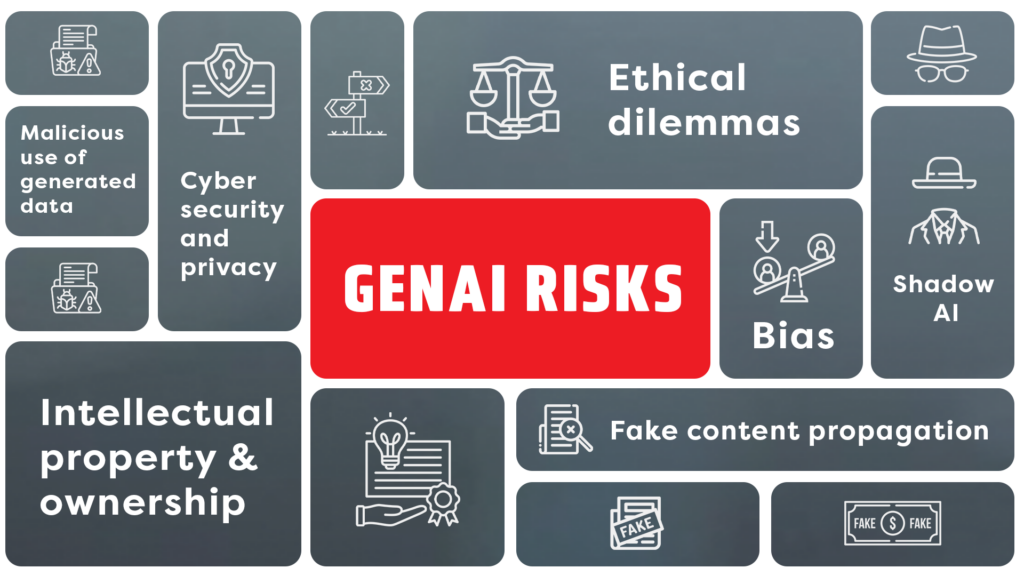
Without governance, enterprises face risks such as:
- Regulatory violations and fines
- Data leakage or IP exposure
- Ethical and reputational damage
- Loss of stakeholder trust
A structured framework provides control without stifling innovation.
Core Pillars of an Enterprise GenAI Governance Framework
1. Risk Identification & Classification
Enterprises must first identify where GenAI introduces risk:
- Data Risk: Sensitive, personal, or regulated data exposure
- Model Risk: Hallucinations, bias, or inaccurate outputs
- Operational Risk: Workflow disruptions or over-automation
- Legal & Regulatory Risk: Non-compliance with industry regulations
Use case–based risk classification helps determine appropriate controls.
2. Governance Structure & Ownership
Clear accountability is essential. Enterprises should define:
- AI Steering Committees (business, IT, legal, compliance)
- Model Owners responsible for performance and compliance
- Risk & Ethics Review Boards for sensitive use cases
- Escalation Paths for incidents or policy violations
This ensures cross-functional oversight rather than siloed decision-making.
3. Data Governance & Security Controls
Data is the foundation of GenAI—and the largest risk vector.
Key controls include:
- Data classification and access policies
- Encryption and secure data pipelines
- PII masking and anonymization
- Restricted training on proprietary or customer data
Enterprises increasingly adopt private LLM deployments to maintain data sovereignty.
4. Model Governance & Explainability
Enterprises must be able to explain, audit, and justify AI outputs, especially in regulated industries.
Best practices include:
- Model documentation and versioning
- Prompt and output logging
- Explainability layers for decision support use cases
- Human reminders for high-risk decisions
Explainability builds regulatory confidence and internal trust.
5. Compliance & Regulatory Alignment
GenAI governance must align with regional and industry regulations, such as:
- Financial services regulations
- Healthcare data protection laws
- Emerging AI governance standards
- Data protection and privacy requirements
Compliance teams should be involved early to ensure AI-by-design compliance, not retroactive fixes.
6. Ethical AI & Responsible Use
Ethical considerations are central to enterprise adoption:
- Bias detection and mitigation
- Fairness testing across demographics
- Clear boundaries for AI-generated content
- Transparency in AI-assisted decisions
Responsible AI principles protect both end users and brand reputation.
Operationalizing the Governance Framework
To move from policy to practice, enterprises should:
- Embed Governance into the AI Lifecycle
From ideation and design to deployment and monitoring. - Adopt Tiered Controls
Low-risk use cases move fast; high-risk use cases receive stricter oversight. - Automate Monitoring & Auditing
Track performance, drift, bias, and compliance continuously. - Enable Human-in-the-Loop Oversight
Especially for decisions affecting customers, finances, or compliance. - Train Teams on AI Risk Awareness
Governance succeeds only when people understand and follow it.
Benefits of a Strong GenAI Governance Framework
- Regulatory Readiness: Easier audits and compliance assurance
- Risk Reduction: Early detection of bias, errors, or misuse
- Trust & Adoption: Employees and customers trust governed AI systems
- Scalable Innovation: Faster rollout of new use cases with confidence
- Reputation Protection: Ethical and transparent AI usage
Role of GenAI Partners in Governance Enablement
Many enterprises work with GenAI consulting to:
- Design governance frameworks tailored to industry needs
- Implement private and secure AI architectures
- Build monitoring, logging, and explainability layers
- Align AI initiatives with regulatory and ethical standards
Partners accelerate governance maturity while reducing trial-and-error.
Governance as an Enabler, Not a Barrier
When done right, GenAI governance does not slow innovation—it enables it. A well-designed risk, governance, and compliance framework gives enterprises the confidence to scale AI responsibly, unlock value faster, and build trustworthy, future-ready AI systems.
FAQs
1. Is GenAI governance mandatory for enterprises?
While regulations vary, governance is essential for risk management, compliance, and sustainable AI adoption—especially in regulated industries.
2. How does GenAI governance differ from traditional IT governance?
GenAI governance must address non-deterministic behavior, bias, explainability, and ethical risks, which traditional IT governance does not cover.
3. Should governance be centralized or decentralized?
A hybrid model works best—central standards with flexible controls tailored to individual business units and use cases.
